
WORLDWIDE SHIPPING

The strongest part of the G-Shock range is still the affordable middle. You can spend much more on full-metal cases, advanced sensors or premium construction, but the core appeal - shock resistance, useful functions and unmistakable design - is already available well below $250.
That budget covers several very different watches: classic digital squares, slim octagonal GA-2100 models, large analog-digital cases and newer Bluetooth-equipped designs. The important choice is not simply which one has the longest specification list. It is which case, display and strap you will actually enjoy wearing.
There is no shortage of G-Shock watches under $250. The harder part is separating models that look impressive in product photos from the ones that remain comfortable, legible and easy to operate after a full day on the wrist.
For this guide, the evaluation focused on practical details alongside the published specifications: case height and balance, how the resin or fabric strap bends around the wrist, whether the buttons can be found without looking, how quickly the display can be read indoors and outdoors, and whether the watch feels top-heavy when the wrist moves.
The result is a deliberately mixed list. Some picks are compact and straightforward; others are oversized because that scale is exactly what many G-Shock buyers want. The ranking favors usability, but it does not pretend every buyer wants a discreet watch.
Price note: The prices shown were available when this article was prepared. G-Shock pricing changes with stock, discounts and color availability, so check the current product page before ordering.
| Model | My take | Style | Listed price |
|---|---|---|---|
| GA-2100RL-1A | The easiest one to wear every day | Slim analog-digital CasiOak | About $151 |
| GA-B001CBR-1A | A connected G-Shock that still feels like a watch | Modern analog-digital | About $198 |
| GA-2000-1A9 | One of the better modern rugged designs | Carbon Core Guard analog-digital | About $205 |
| GAW-100B-1A | Big, busy and packed with G-Shock character | Large analog-digital | About $222 |
| GA-140-1A1 | A lot of watch for the money | Bold analog-digital | About $134 |
| GA-010CE-2A | A refreshing alternative to another black resin model | Large blue analog-digital | About $172 |
| GMS5600MF-6 | A smaller square with a more polished feel | Compact purple square | About $248 |
| DW5600LH-4 | The classic square without the usual black finish | Pink digital | About $160 |
| GMDB300SC-7 | Clean, compact and easy to read | White digital | About $152 |
Function count is a poor way to judge value on its own. Time, date, light, stopwatch and an alarm cover most daily use. World time, multiple timers, solar charging and phone connectivity become meaningful only when they solve a real need rather than making the specification table longer.
On-wrist fit deserves equal weight. A large case can be comfortable when the strap articulates quickly and the weight stays centered; a smaller watch can still annoy if the strap is stiff or the display is hard to read. Button feel and backlight access also matter more after a week of use than they do in a showroom photo.
The list therefore includes several proportions and display types. A first-time buyer may prefer a neutral GA-2100, while someone who already owns large resin models may get more use from a compact square. The broader Casio watch collection makes those comparisons easy because the brand repeats core functions across very different cases.
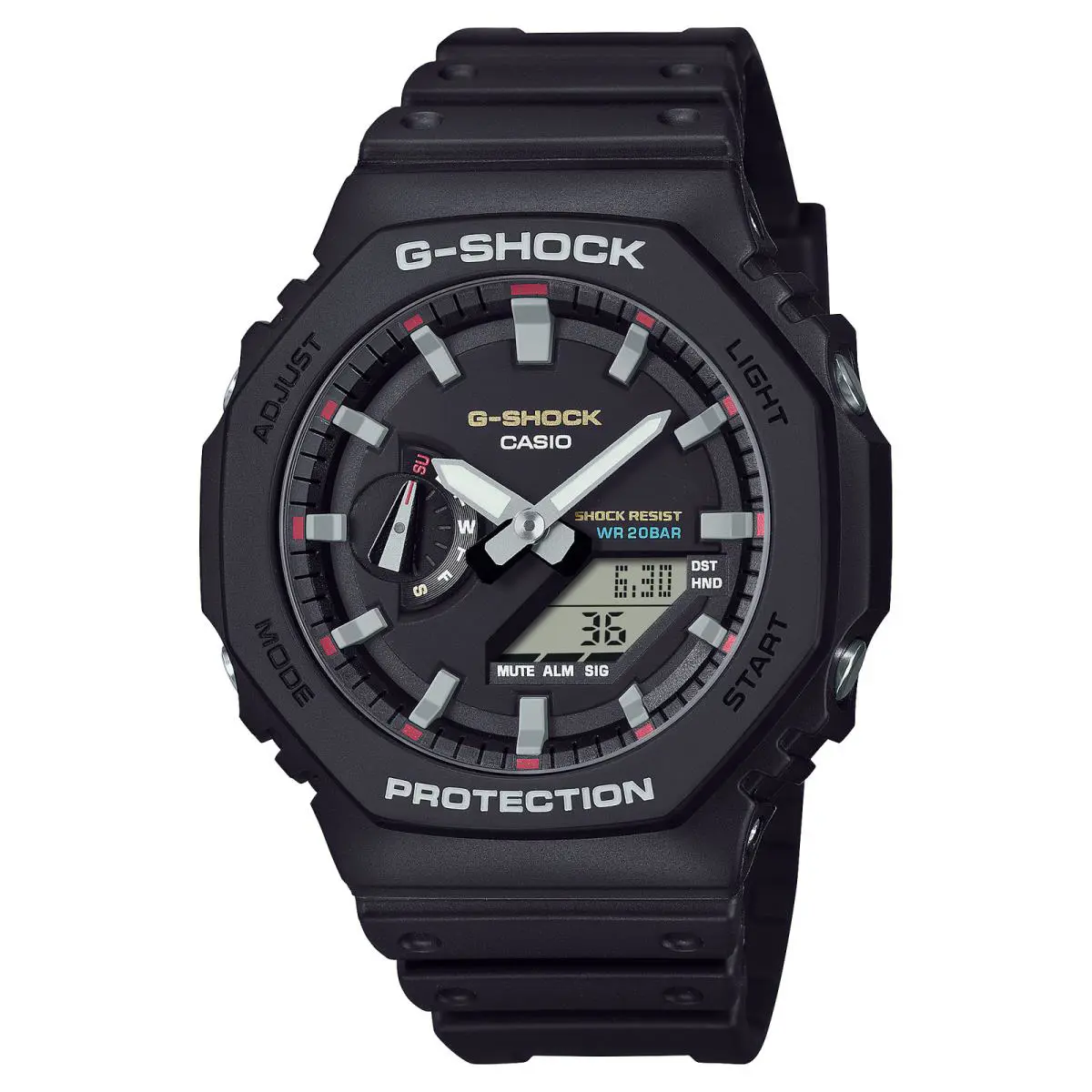
The GA-2100RL-1A is the easiest recommendation here because it combines recognizable G-Shock design with proportions that do not demand much adjustment from the wearer.
Its octagonal case sits noticeably flatter than the brand's larger analog-digital models. During a fit check, the case stayed closer to the wrist and slipped under a jacket cuff with less resistance, while the resin strap curved naturally instead of pushing the case away from the arm.
The black case and strap keep it versatile, and the colored accents prevent the dial from feeling anonymous. The main compromise is the small digital window, which is less immediate than a full digital square when you need secondary information quickly.
For a first G-Shock, that is a fair trade. You get the toughness and visual identity without committing to a very tall or wide case. Buyers comparing the octagonal family should also see the GA-2100, GM-2100 and GMB-2100 CasiOak comparison.
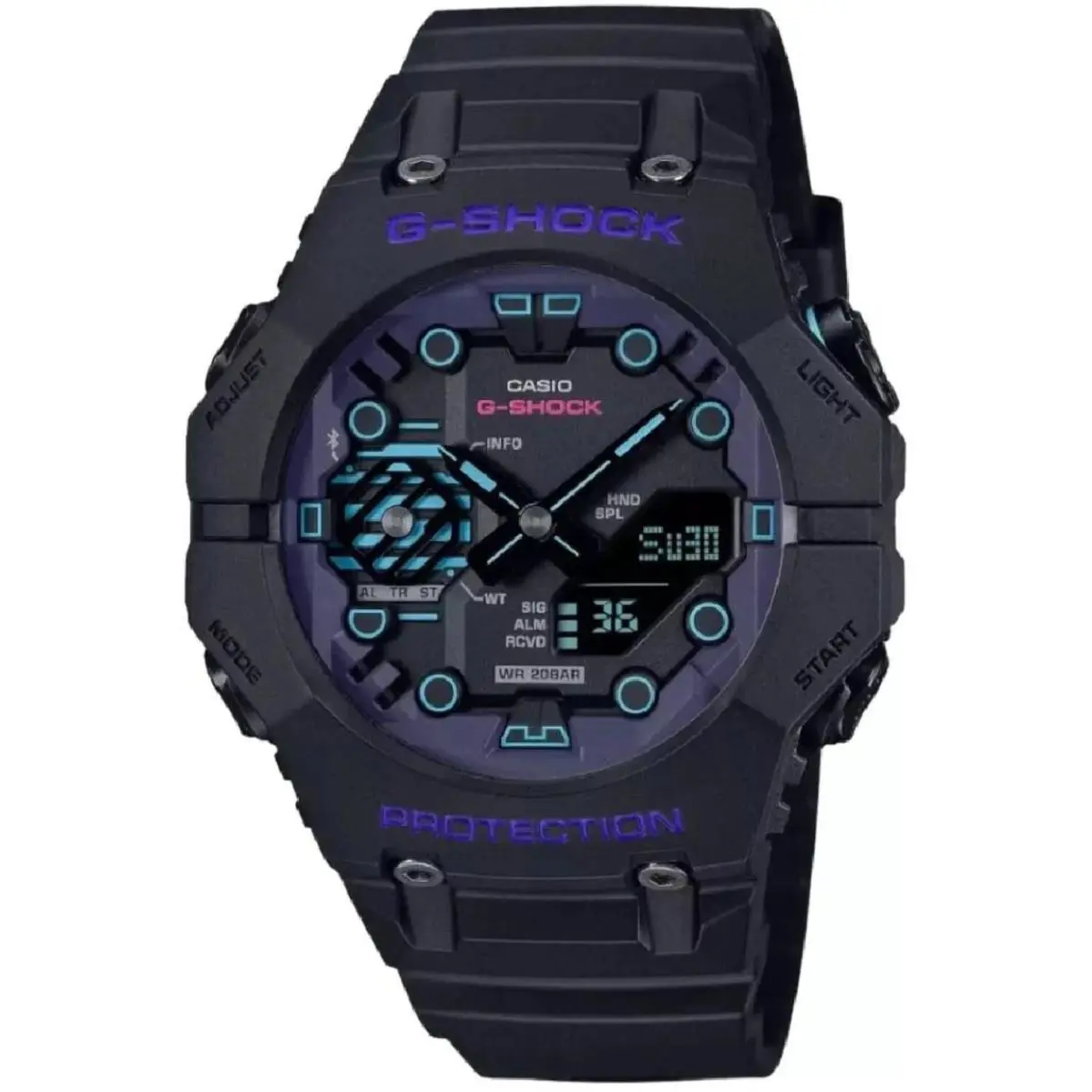
The GA-B001CBR-1A adds Bluetooth while still behaving like a conventional G-Shock. The connected functions stay in the background, which is useful for anyone who wants easier setup without another bright smartwatch display.
The layered black-and-blue bezel gives the case more depth than a standard GA-2100. In hand, the separate case elements are more obvious than they are in flat photos, and the watch has a technical look without becoming excessively bulky.
Phone-assisted setup is genuinely convenient for world time and settings that would otherwise require button sequences. It should still be treated as a convenience feature, not the reason to buy the watch. The case design and everyday fit matter more once setup is finished.
Compared with the GA-2100, this model is visually busier and less neutral, but it rewards buyers who want something more modern. It is a good middle ground between a basic analog-digital G-Shock and a full smartwatch.
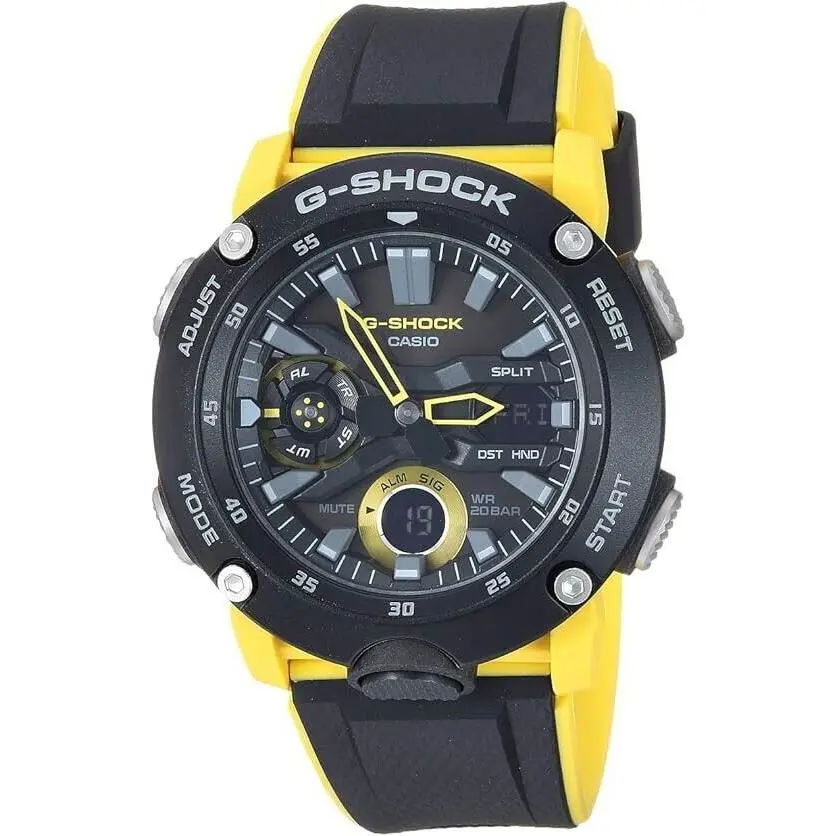
The GA-2000-1A9 looks heavier than it feels. The layered case and large dial suggest substantial weight, but the Carbon Core Guard construction keeps the watch from feeling as dense as its appearance implies.
The front light button is one of the most useful physical details in this group. It can be located quickly with a fingertip, even without looking at the case. The yellow accents also help break up the dial and make the watch easier to orient at a glance.
On the wrist, the GA-2000 occupies a useful middle position. It has more presence than a GA-2100 but avoids the top-heavy feeling that some very large G-Shocks develop. If you want a rugged look without moving into Mudmaster size or price, it is a strong option.
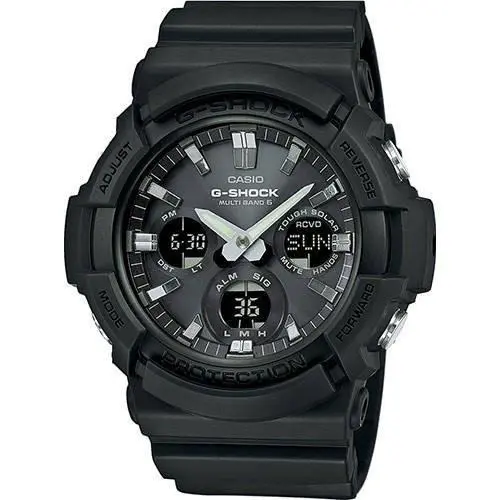
The GAW-100B-1A is unapologetically large. The case, markers and analog-digital layout are designed to have presence, so buyers with smaller wrists should pay close attention to the listed measurements before ordering.
The dial has good depth, but it is not the fastest design to read. In a quick legibility check, the hands are easy enough to find, while the smaller digital information requires an extra moment compared with a DW-5600. That is the cost of the more dramatic layered layout.
Choose it because you want a big G-Shock, not despite the size. If a watch that sits quietly under a cuff is the goal, there are better options here. If you like a case that feels substantial and looks unmistakably G-Shock from across the room, the GAW-100B-1A makes sense.
The GA-140-1A1 delivers the traditional oversized G-Shock look for about $134. The case is large, the dial is heavily layered and the all-black resin construction keeps the overall appearance more wearable than a brighter colorway would be.
Readability is the trade-off. There is a lot happening on the dial, and the information hierarchy is not as clean as a digital square. If you often check the time while moving, the DW-5600 layout is quicker. If visual complexity is part of the appeal, the GA-140 earns its place.
The watch feels substantial without pretending to be refined. It also offers the 200-meter water-resistance rating associated with many G-Shock models. At this price, the value comes from getting the full oversized resin experience rather than premium materials.
The GA-010CE-2A stands out simply because the blue case and fabric-style strap move away from the endless black-resin variations in the range.
The textile-style strap changes both the look and the feel. It is softer against the wrist than some stiff new resin straps and gives the watch a more relaxed outdoor character, although fabric also needs more drying time after sweat or water exposure.
This is a good weekend or travel option if your collection is already dominated by black, grey or steel. It is less universal with clothing, but that is not a defect if the goal is to add a watch with a distinct identity.
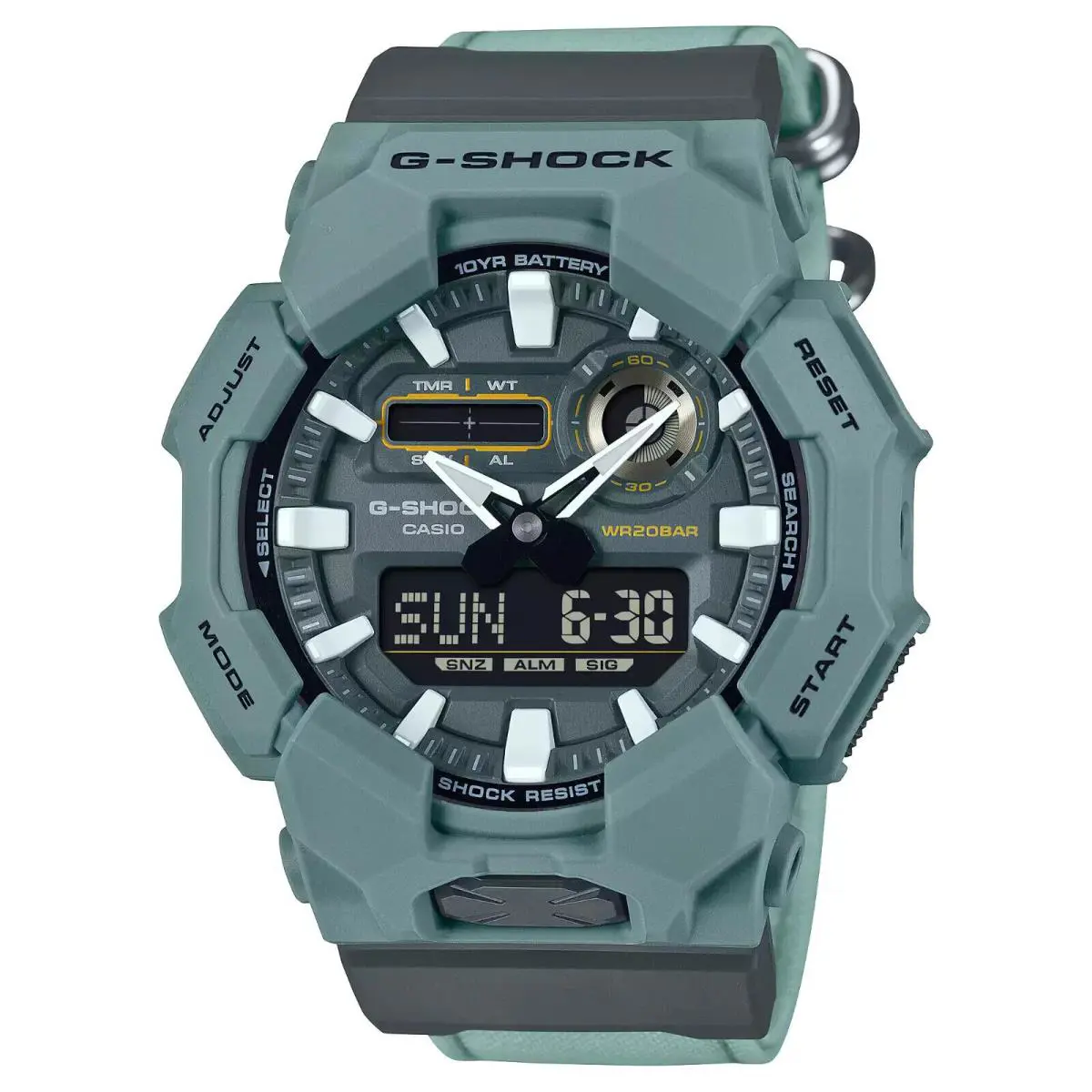
The GMS5600MF-6 keeps the square G-Shock idea in a smaller case of approximately 43.8 x 38.4 x 10.9 mm. Those dimensions make a real difference on wrists that are overwhelmed by the larger GA-series cases.
The digital layout is straightforward and the case sits close to the wrist. During longer wear, the compact proportions reduce the leverage that makes tall watches shift around the arm. The purple finish adds fashion interest without changing the practical square layout.
At about $248, this is a style-and-proportion purchase more than a feature upgrade. Buyers who only want an inexpensive square can spend less. Buyers who specifically want the smaller case and purple finish may find the premium justified.
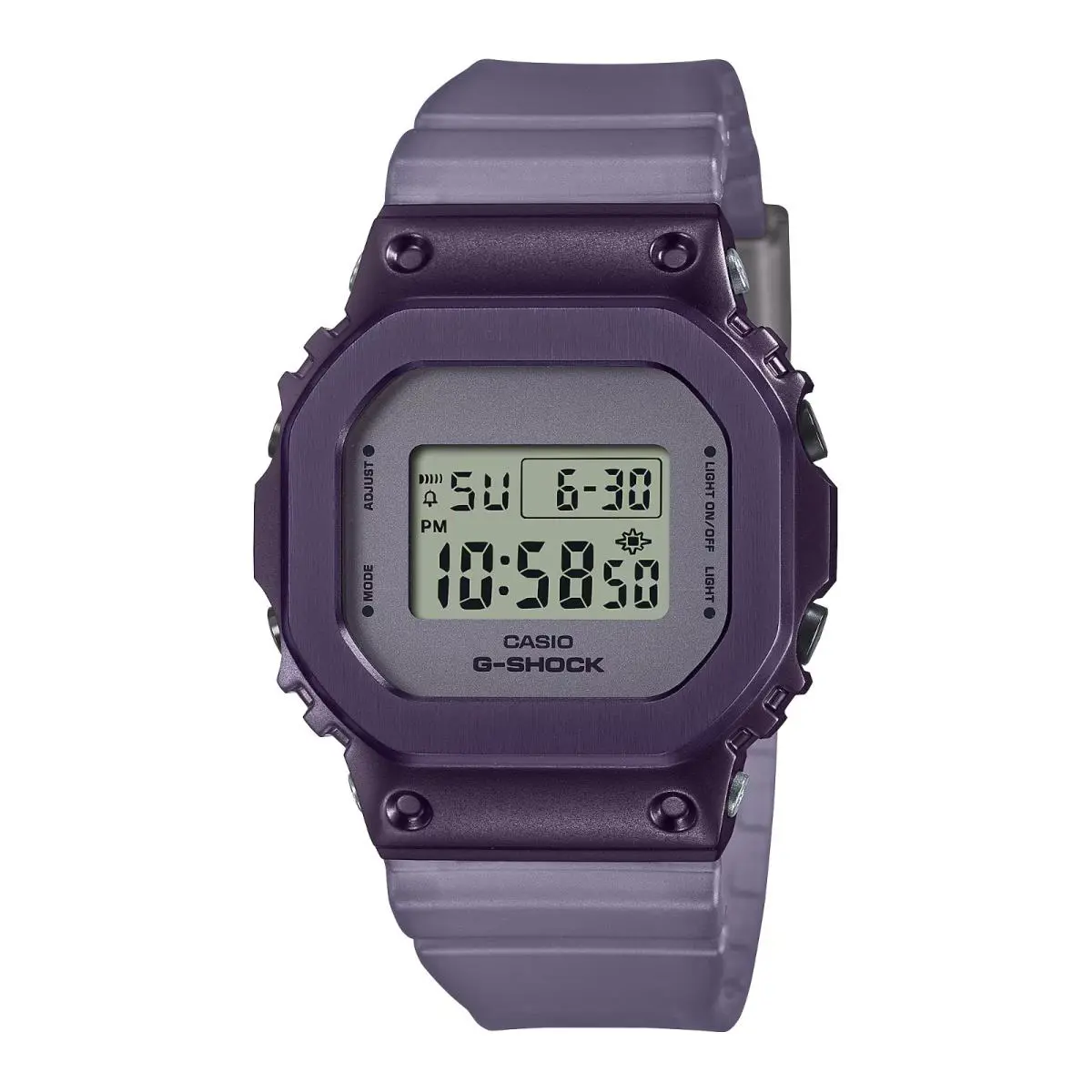
The DW5600LH-4 uses one of G-Shock's most proven case shapes and gives it a bright pink finish. The color is playful, but the underlying watch remains a compact, practical digital square.
The 5600 shape is easy to live with because the case stays relatively flat, the strap bends quickly around the wrist and the display can be read with very little visual effort. It is the kind of design that becomes easier to appreciate after several hours of wear.
The pink finish changes the personality without compromising the function. It is a good example of why collectors often own more than one square: the same familiar case can feel completely different in another color.
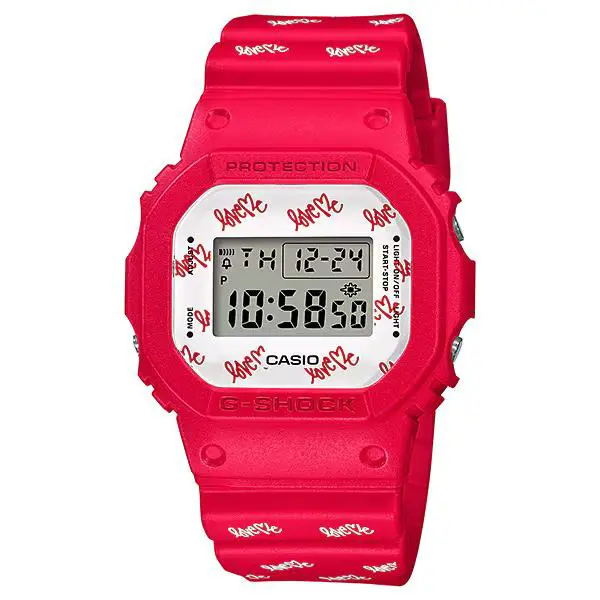
The GMDB300SC-7 is another compact option, with a white finish that gives the digital design a lighter, cleaner look than the usual black resin.
Its biggest strength is legibility. After moving between busier analog-digital dials and this display, the advantage is obvious: the time is available immediately, with no need to search around hands or small sub-displays.
White resin needs more care. Denim dye, makeup and everyday grime are easier to see, especially around strap edges. That is a reasonable compromise for a summer watch or for anyone who specifically wants a cleaner, brighter G-Shock.
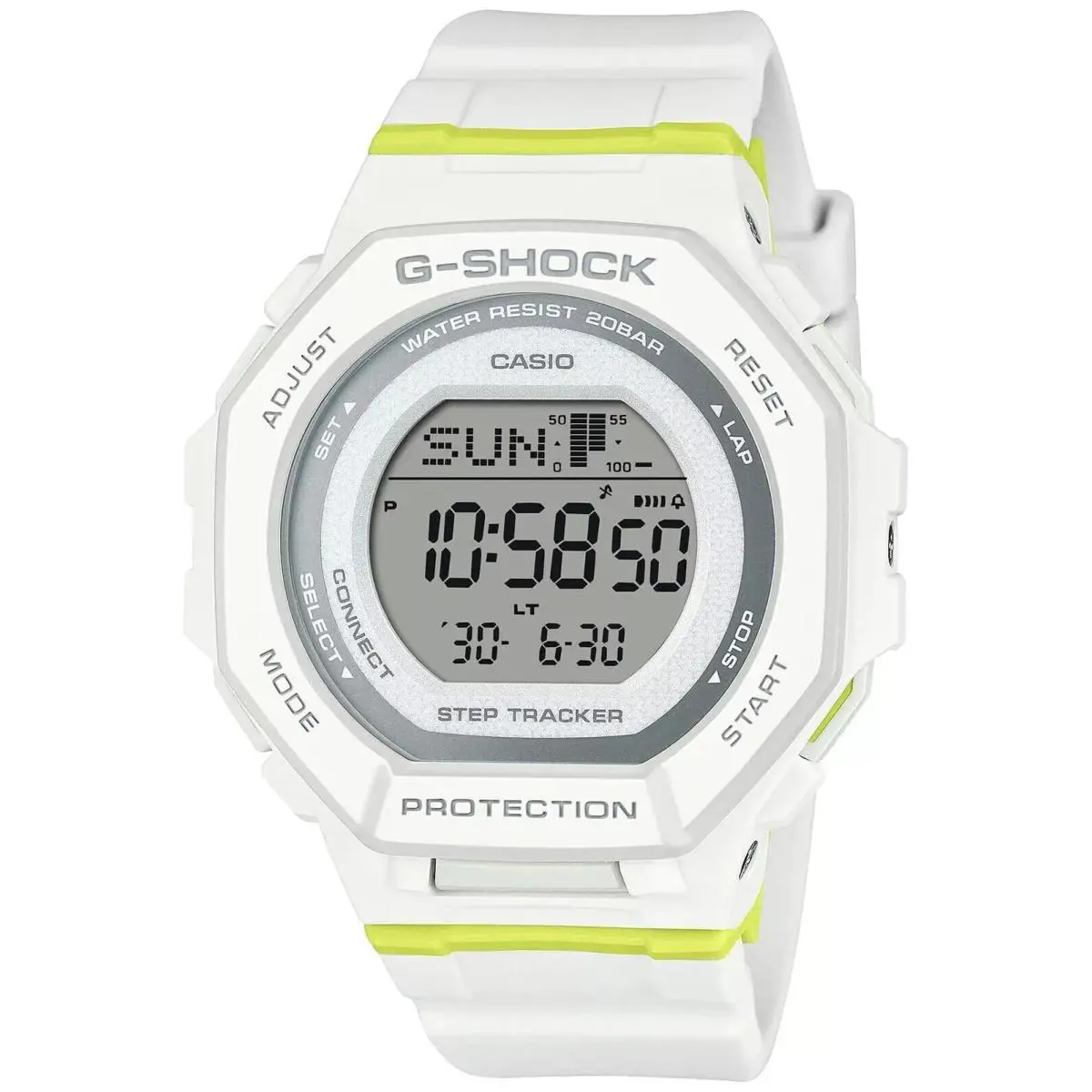
If instant legibility is the priority, a traditional digital watch is still difficult to beat. The square G-Shock layout is visually simpler than a layered analog-digital dial, but that simplicity is useful when checking the time while walking, traveling or exercising.
Analog-digital models provide more depth and often feel closer to a conventional sports watch. The compromise is smaller digital windows and more visual competition on the dial, especially with dark or negative displays.
Case measurements deserve more attention than product photography. A front-on image hides height and lug-to-lug spread, which are often the dimensions that determine whether a large G-Shock stays centered or overhangs the wrist.
A useful method is to compare the listed width and height with a watch you already own, then consider how the strap attaches. Flexible strap joints can make a large case wearable; rigid first links or widely spaced attachment points can make a slightly smaller watch feel larger.
Buy extra features only when you can name the problem they solve. Bluetooth is helpful for setup and travel, solar charging reduces battery changes, and world time is useful if you regularly move between zones. Otherwise, they should not outweigh fit and legibility.
A simple G-Shock with a clear display and reliable backlight can be more satisfying than a complicated model that sends you back to the manual. Ease of use is part of durability because a watch that is frustrating to operate often ends up being worn less.
Black resin remains the safest one-watch choice because it hides marks, works with most clothing and does not draw attention to scuffs. It is practical rather than exciting.
Color becomes more interesting once the basic need is covered. Pink, blue, white and transparent models may be less universal, but they can give a collection variety without changing the familiar G-Shock controls and toughness.
Yes. For most buyers, $250 is more than enough for a proper G-Shock. Shock-resistant resin construction, dependable quartz timekeeping, alarms, timers and strong water resistance are available well below the top of this budget.
Spending more can add metal cases, full-metal bracelets, advanced sensors and more elaborate finishing. Those upgrades are real, but they do not automatically make a cheaper resin watch less useful. The lower-priced model may actually be lighter and more comfortable for sport or travel.
The roughly $120 to $210 range is especially strong because it includes Bluetooth models, Carbon Core Guard cases, distinctive colorways and several of the brand's most wearable analog-digital designs.
For collectors, that range is appealing because the watches are different enough to justify owning more than one case shape without moving into premium-watch pricing.
Yes. Many of the models that best represent G-Shock sit below $250, including classic digital squares, slim octagonal cases, large analog-digital watches and Bluetooth-connected options.
For most wrists, the GA-2100 family is the easiest starting point because it is slimmer than many traditional G-Shocks. If maximum readability matters more than analog styling, the DW-5600 square is even simpler to live with.
Many models in this price range are rated to 200 meters of water resistance, but always confirm the specification for the exact reference before swimming or using the watch around water. Water-resistance ratings apply to properly maintained watches with intact seals.
Neither display type is automatically better. Digital models are usually quicker to read and simpler to operate. Analog-digital models offer more visual depth but can sacrifice some glance legibility. Fit and readability should decide the choice, not the label alone.
Yes. Discounts, discontinued colors, regional stock and availability can move prices significantly. Another color of the same reference family may also cost less, so check the current listing rather than treating the figures in this guide as permanent.
For an everyday choice, the GA-2100RL-1A remains the strongest all-rounder. It has enough G-Shock identity to feel distinctive, but the flatter case and flexible resin strap make it easy to wear for long periods.
For more technology, the GA-B001CBR-1A adds Bluetooth without becoming a smartwatch. If size and visual impact matter more than quick legibility, the GA-140-1A1 offers a lot of traditional G-Shock presence for the money.
The best model under $250 is therefore not the one with the most functions. It is the one whose case stays centered, whose display you can read quickly and whose strap remains comfortable after the novelty has worn off. This price range offers enough variety to find that combination without paying for features you will never use.

| OPTION | ||||
| STANDARD | FREE | N/A | 4-9 Business Days | N/A |
| REGISTERED | $9 | $25 | 3-7 Business Days | 5-21 Business Days |
| EXPRESS | $29 | $45 | 2-7 Business Days | 3-9 Business Days |
* DAS and CES may apply.
DAS: There are certain locations in the world where the shipping carriers charge extra fees to deliver packages to these locations. These fees are called DAS (Delivery Area Surcharge) and are usually charged by the carrier in areas that are less accessible for pickups and deliveries.
CES: There are certain cases where the shipping carriers charge extra fees to deliver packages for several reasons, for example: exceeding certain dimensions or weight, perfumes, etc. These fees are called CES (Courier Extra Surcharge).
Handling time: Our handling time is 1-3 business days after the payment has been received.
Import Fees: Any customs or import duties are charged once the parcel reaches its destination country must be paid by the recipient of the parcel. We have no control over these charges and cannot predict what they may be. Customs policies vary widely from country to country. You can contact your local customs office for further information.
For some countries, we calculate Duty VAT, Taxes, etc. following the laws and import regulations of the destination country. These fees are calculated based on destination, item type, and country of origin, manufacture or assembly.